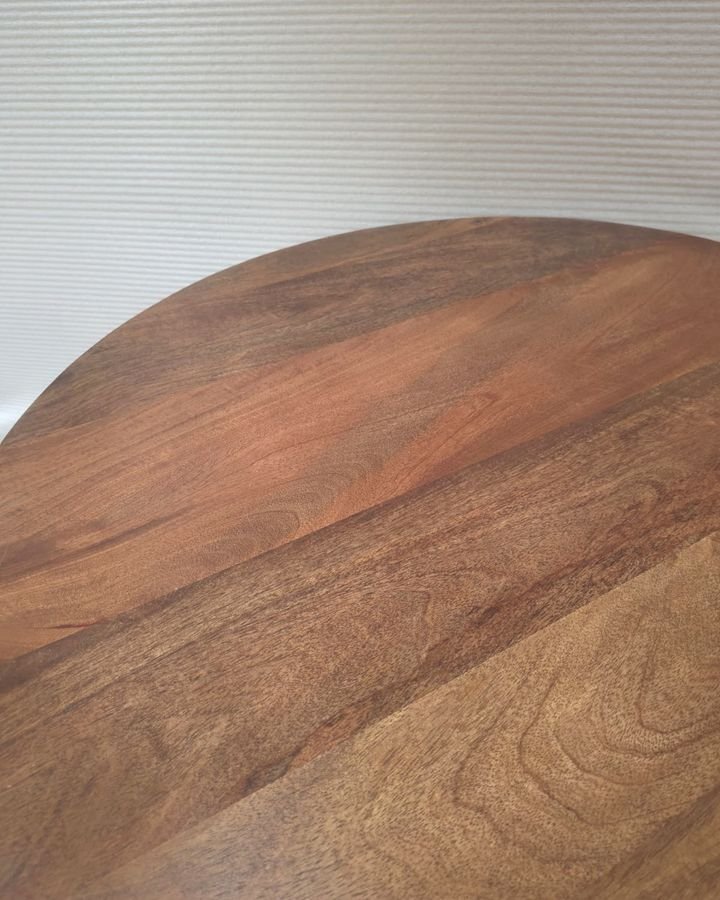
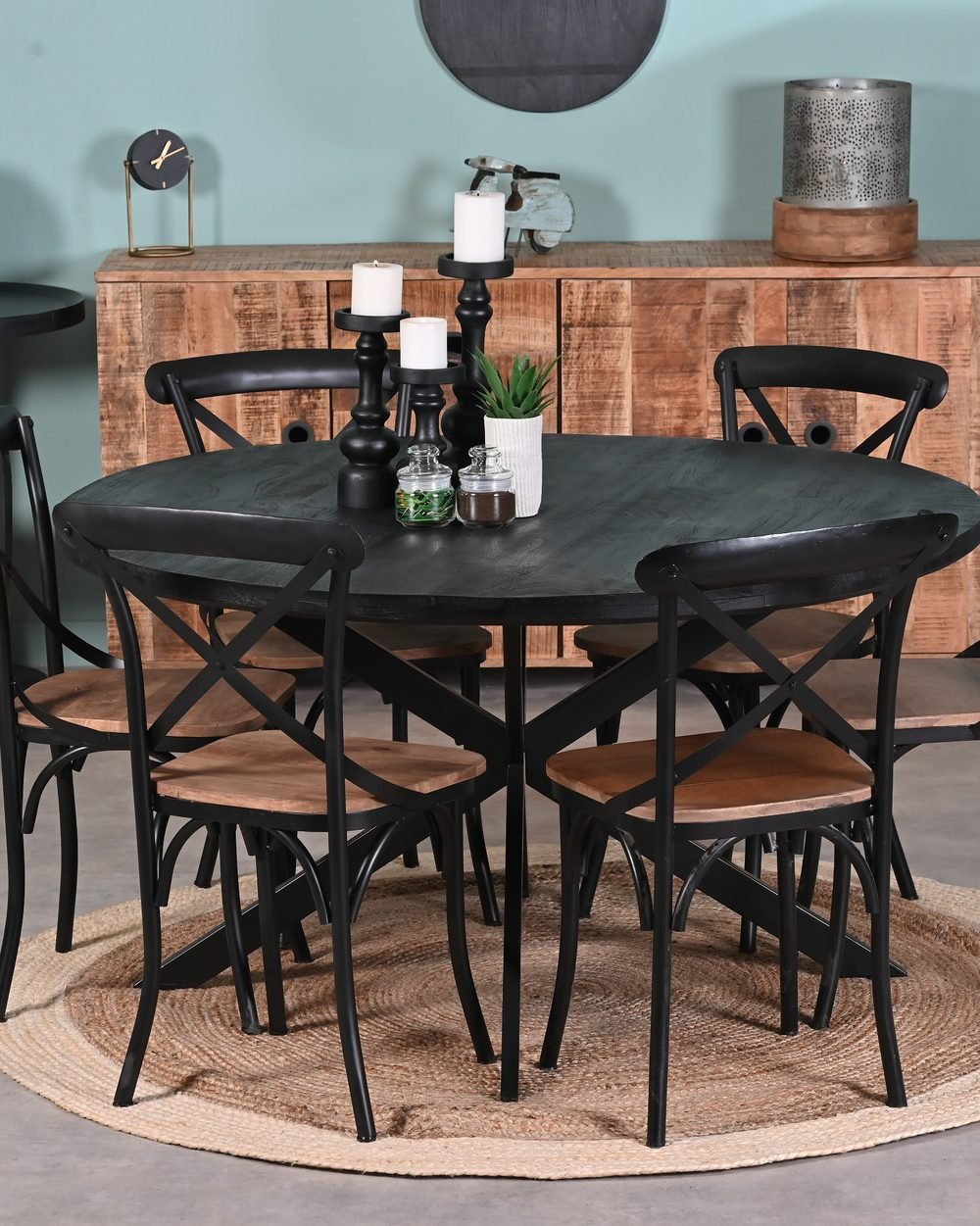
Sheesham, also called Indian rosewood, is one of the woods we work with most. It's dense, strong and has a deep brown colour with darker streaks that buyers love. It's also forgiving. A sheesham chair can take years of daily use. But a few simple habits keep the colour rich and the finish looking new, and they take less time than people expect.
Every day
- Dust with a soft, dry cloth. Microfibre works well. Dust is slightly abrasive and dulls the finish over time.
- Wipe spills straight away. Water left standing can leave a pale ring, especially on oiled or waxed finishes.
- Use coasters under glasses and mats under hot dishes. Heat and condensation are the two most common causes of marks on dining tables.
- Lift objects instead of sliding them across the top. Ceramic bases and metal feet scratch.
Every few weeks
Wipe the surface with a cloth that is barely damp, never wet, then dry it straight away with a second cloth. For greasy marks on a dining table, a drop of mild washing-up liquid in water is enough. Avoid silicone polishes and household spray cleaners. Silicone builds up a film that clouds the finish and makes it hard to refinish later, and many sprays contain solvents that soften lacquer.
Where you place it
Sheesham reacts to light and dry air like any natural wood.
- Sunlight: strong direct sun fades and changes the colour over months. Move pieces slightly or use curtains in the brightest hours, and rotate items on a table so one area doesn't fade more than another.
- Heaters and AC vents: blowing hot or cold air dries the wood quickly and can open small cracks. Keep a gap of at least a metre where you can.
- Damp floors: in monsoon areas or basements, leave a little space between furniture and walls so air can circulate.
Once or twice a year
Check that joints are tight and that screws in hardware, hinges and leg plates are firm. A loose joint left alone gets worse with every use. For pieces with a natural oil or wax finish, a fresh thin coat of furniture oil or wax brings the colour back. Apply sparingly, leave it for the time the product says, and buff off the excess. Lacquered or PU-finished pieces don't need oil; a clean and dry is enough.
Small marks and scratches
Light surface scratches on oiled sheesham can often be blended with a little oil on a soft cloth. White rings from heat or moisture on waxed finishes sometimes fade with gentle buffing. Deeper damage on lacquered pieces is a job for a finisher, but solid wood has the advantage that it can be sanded and refinished, something board furniture can't do.
For hotels and cafes
If sheesham is going into a restaurant or hotel, ask for a hard-wearing lacquer or PU finish rather than oil. It handles constant wiping and the odd spilled drink far better. Train housekeeping to use damp cloths and neutral cleaners only, and keep a small touch-up kit in the matching colour.
Want sheesham pieces for your range or project? Many of our ready stock chairs and sofas are sheesham, and we make to order in your size and finish. See solid wood furniture.