If you've ever had a shipment arrive with a split table top or drawers that won't close, there's a good chance the problem started months earlier, before the wood was even cut to size. Most cracks, gaps and warped panels come down to one thing: how much water was still inside the timber when the furniture was made.
What moisture content means
A living tree is full of water. Once it's cut, the timber starts to dry, and as it dries it shrinks, mostly across the grain rather than along it. Moisture content is simply the weight of water in the wood compared with the weight of the dry wood, written as a percentage.
Wood never stops responding to the air around it. It takes on moisture in humid weather and gives it back in dry weather until it reaches a balance with its surroundings. That balance point changes with climate, season and even whether a room is heated or air-conditioned.
What goes wrong when wood is too wet
If furniture is made from timber that hasn't dried enough, it keeps drying after it leaves the factory. The pieces shrink unevenly, and you see it as:
- joints that open up or loosen
- table tops that cup (curl at the edges) or crack along the grain
- panels that split inside frames
- drawers that stick in summer and rattle in winter
- mould or a musty smell inside cartons after a long sea voyage
Wood that's far too dry can cause the opposite problem in a humid destination, swelling and sticking, though in our experience wet timber causes far more claims.
Why it matters more for exports
A table made in a humid month in India may spend weeks in a container and then end up in a centrally heated home in Europe or North America, where indoor air is very dry in winter. The bigger the difference between where the wood was made and where it lives, the more it moves. That's why many importers specify a target moisture range on their purchase order. Ranges of roughly 8 to 12 percent are common in buyer specifications, with drier targets for heated climates, but your own spec should come from your market and your inspection company.
How factories check it
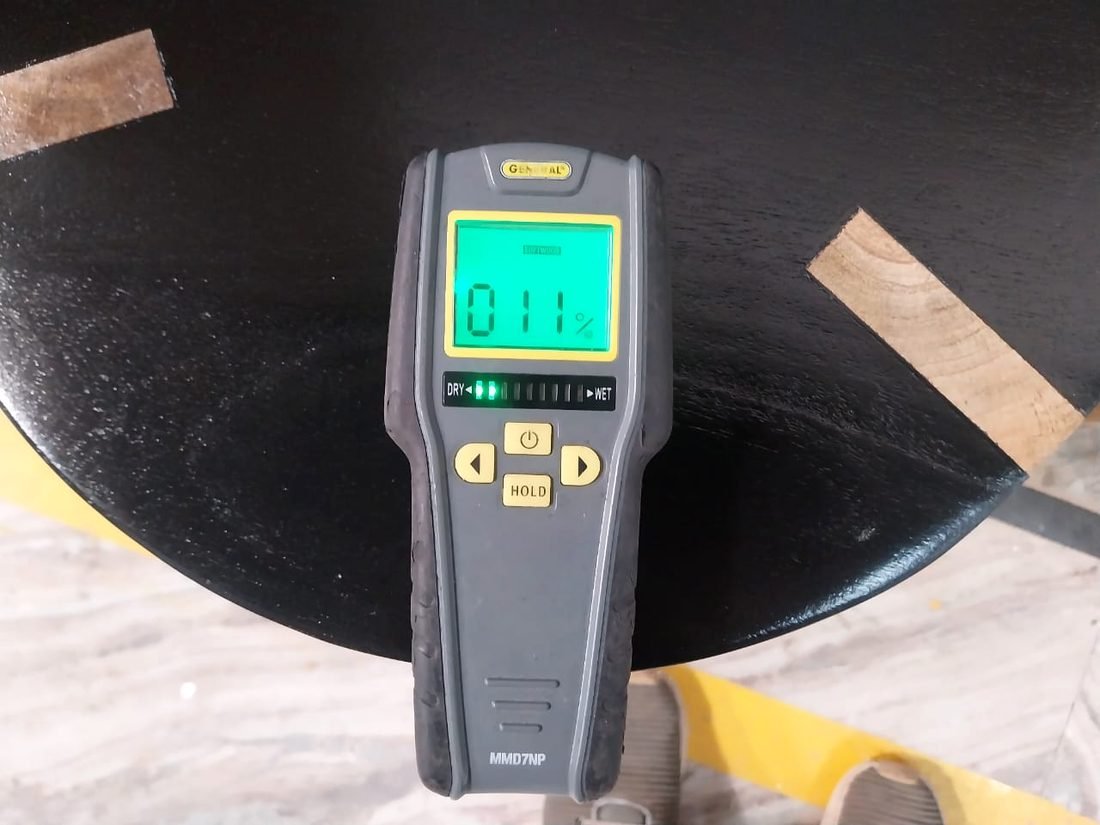
A pin or pinless moisture meter is pressed against the timber and gives a reading in seconds. Good practice is to check:
- when timber arrives at the yard
- before parts are machined and joined
- on finished pieces before packing
Readings should be taken on several pieces from each batch, not just one, and written down. If you use a third-party inspector, moisture is usually on their checklist at the pre-shipment inspection too.
Design helps as well
Good construction allows wood to move a little without damage. Solid tops are fixed to frames with clips or slotted holes rather than glued tight. Panels float in grooves. Wide tops are built from several narrower boards with the grain alternated. A factory that knows wood will build these details in as standard.
What to ask your supplier
- What moisture range do you work to, and does it match my market?
- Do you check at raw material stage and again before packing?
- Can you share readings for my order, with photos?
- How are solid tops fixed to their frames?
In our Jodhpur units we check moisture on timber and on finished parts before export packing, alongside size checks and batch inspections by our QC staff. If your order has a specific target, put it on the purchase order and we'll record readings against it. Read more about how we work on our export page, or browse the solid wood pieces in our catalogue.