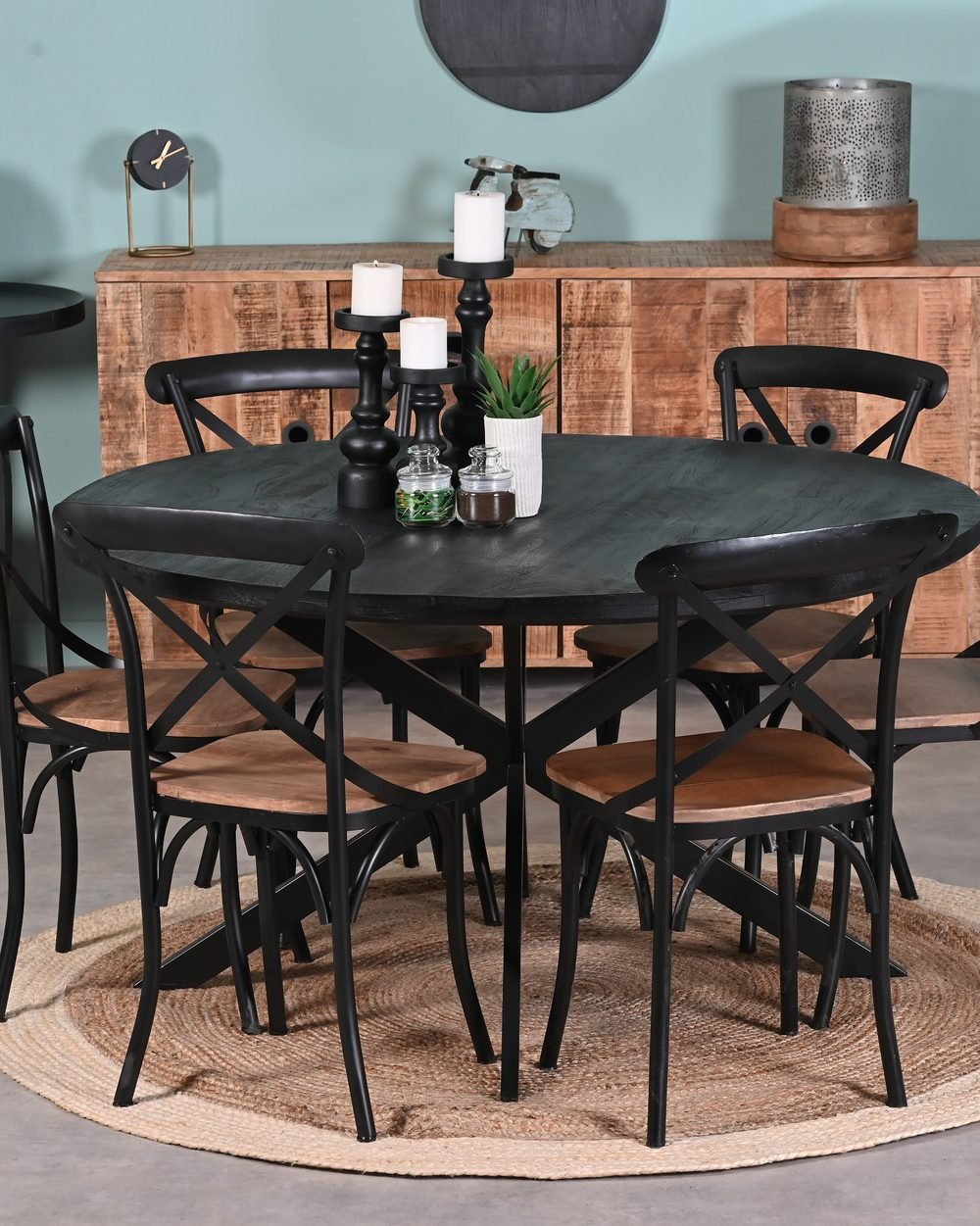
If you look through our catalogue, you'll notice one wood comes up again and again: mango. Most of the chairs, side tables, cabinets and mirrors in our range are made in it. Buyers sometimes ask whether that's a compromise. It isn't. Mango wood has become one of the most popular woods in export furniture for good reasons, and knowing its strengths and limits helps you order it well.
Where mango timber comes from
Mango trees are grown for fruit. When an old tree stops bearing well, farmers replace it, and the trunk goes to timber. That means mango wood is mostly a by-product of orchards rather than forest logged for furniture. For retailers telling a responsible-sourcing story, that's a useful point, though it's no substitute for proper certification if your customers ask for it.
Look and colour
Natural mango is a light to medium brown, sometimes with golden or grey tones. The grain can be fairly plain or strongly figured, and some boards show dark streaks known as spalting. No two pieces look identical, which many buyers like for a handmade feel. If you need a very even look across a big order, say so at the start so timber can be selected for it.
Finishes
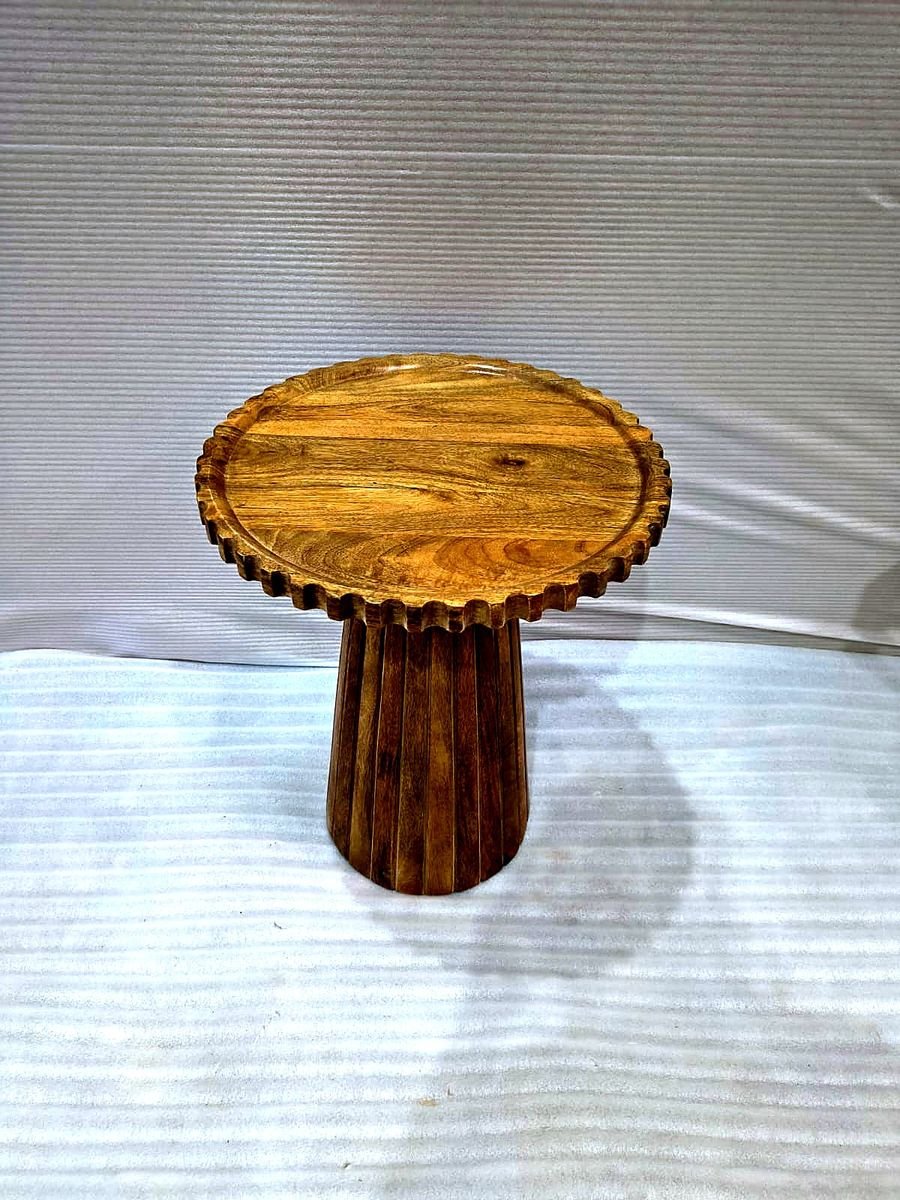
Mango takes stain and colour evenly, which makes it one of the most versatile woods we use. The same design can be finished in a natural matt, a dark walnut tone, a whitewash, a grey wash or solid black. It also carves and machines cleanly, which is why fluted and grooved designs, like our fluted cone side table, work so well in it.
Strength
Mango is a medium-density hardwood. It's strong enough for dining chairs, tables, storage and occasional furniture, and a little softer than sheesham or acacia, so it will dent more easily under a sharp knock. For very heavy-use commercial seating we sometimes suggest sheesham or acacia instead, or a harder finish on mango.
What to check before ordering
- Drying: mango must be properly seasoned and dried before production, or it will move after delivery. Ask how the timber is dried and what moisture range the factory works to.
- Treatment: mango is prone to insect attack if untreated. Ask what treatment is used, especially if your country has strict import rules for wood products.
- Finish sample: because mango colour varies, always approve a physical sample in your exact finish rather than a photo.
- Mixed materials: many mango pieces combine the wood with MDF panels, iron, marble or cane. Check the material list so you know what you're buying.
Mango compared with other woods
Against sheesham, mango is lighter in colour and weight and usually lower in cost. Against acacia, it's a little softer with a calmer grain. Against teak, it's far cheaper but doesn't have teak's natural resistance to outdoor weather, so keep mango indoors.
Sunwoodd makes furniture in mango as well as sheesham, acacia, teak, oak, ash, birch and pine. Browse the mango pieces in our catalogue, and ask us for a sample in your finish. Samples take about 10 days.